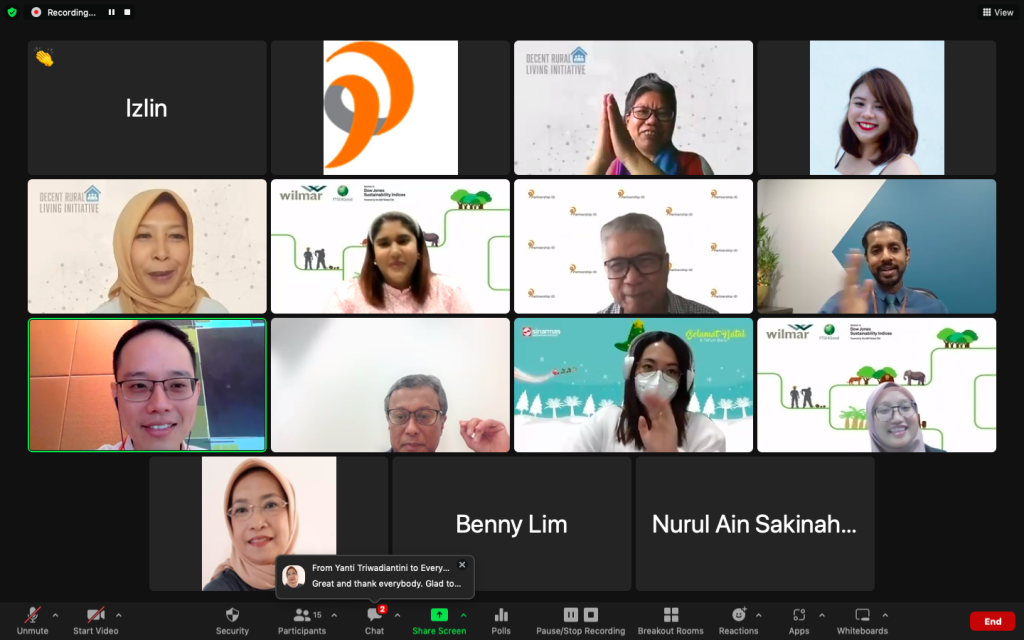

On February 7, 2023, Partnership ID (PID) hosted an online knowledge sharing session for Decent Rural Living Initiative (DRLI) members. The discussion centered on the efforts made by all members to implement Child Rights Protection (CRP) policies in their organizations. In keeping with the DRLI spirit, the session’s goal is for all members to share and learn from one another.
Wilmar, one of the members, was given the opportunity to share experience in piloting its CRP policy in Malaysia and Indonesia. Wilmar published its CRP policy in 2017 and has been piloting it with its partners since then.
Wilmar spoke about good practices, lessons learned, and challenges encountered during the piloting process. Important points include the importance for members to use a variety of approaches in implementing the CRP policy with various vendors, suppliers, or third parties with whom they collaborate. There is no such thing as a ‘one size fits all’ solution. Another point to mention is that it takes a good strategy for members to persuade their partners to implement CRP policy. Finally, members should be aware that there are things that are “must haves” and “nice to haves” when implementing the policy.
At the beginning of the event, Kemal Soeriawidjaja from PID reminded all members of the DRLI spirit of sharing and learning from one another. He expected all members to use the good practices and lessons learned as ideas for implementing the CRP policy in their company and in their own unique way. Citra Aulia and Desy Mutialim from PID are serving as moderators.
Cargill, Golden Agri-Resources, Musim Mas, Sime Darby Plantation, and Wilmar have formed DRLI, a pre-competitive collaboration in 2018. These Anchor Partners are collaborating with relevant experts and stakeholders to develop long-term practical solutions that benefit rural palm oil workers, with an initial focus on Indonesia.
PID serves as the DRLI Secretariat, ensuring smooth coordination among members in promoting good practices implemented by members and raising awareness of these good practices among key stakeholders in Indonesia to gain a better understanding of DRLI’s beneficial effects.